Just How To Review A Peptide Coa Actual Vs Phony
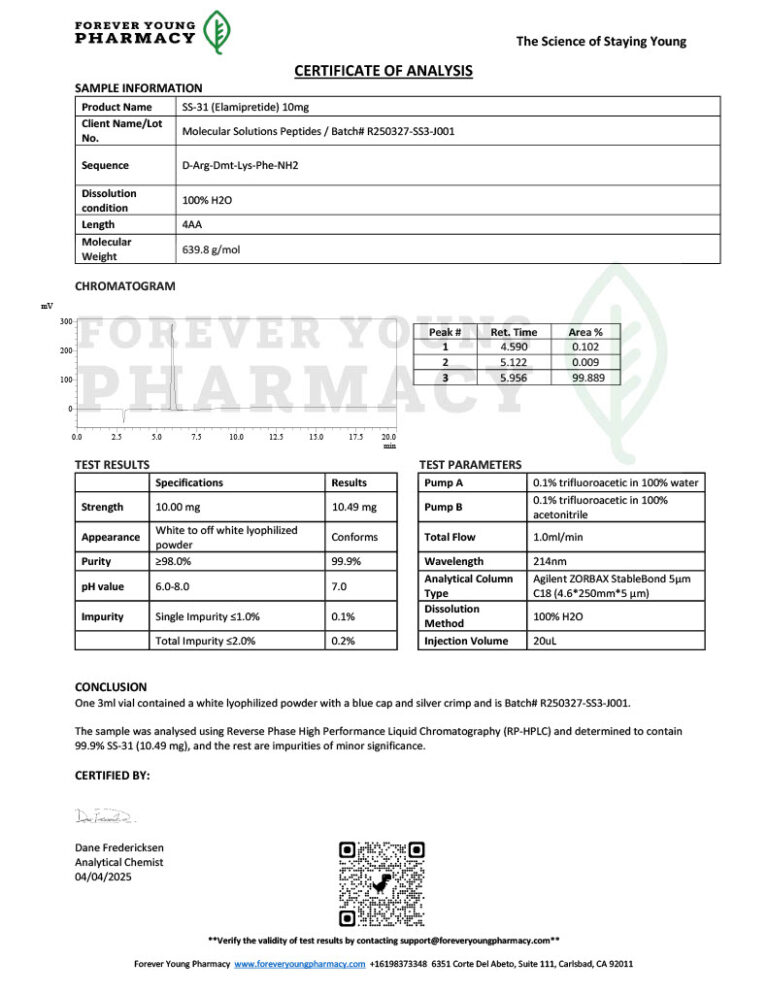
Just How To Verify Research Study Peptide Pureness: Coa & Hplc Lab Guide These limitations put on the whole RUO group, not simply a specific vendor. The examination result is normally delivered as a binary identified or not found, but a genuine tester ought to also be able to create metal-by-metal measurable detail upon demand. Constantly readjust dosing based upon internet material when carrying out accurate quantitative work. If you liquify a 5 mg vial assuming all 5 mg is active peptide, your molar focus will certainly be incorrect. A Certificate of Analysis (COA) is the single crucial document in the research peptide supply chain. BOC Sciences uses multi-batch comparison evaluation to assist clients develop resources high quality standards and ensure uniformity. High-Performance Liquid Chromatography, or HPLC, is a research laboratory screening method utilized to see to it a peptide is clean, pure, and precisely what it claims to be. When peptides like BPC-157 or SS-31 are made, HPLC is just one of the most important tools researchers use to validate their high quality.
Recognizing Peptide Purity: What 99%+ Actually Suggests
At minimum, identity and pureness should be verified per set. Suppliers that provide the same COA for months of manufacturing are not showing adequate quality assurance. The process works by passing the peptide solution via a column packed with specialized material. Different substances interact with this product in a different way, causing them to arise from the column at different times. A detector determines what appears, producing a chromatogram showing peaks for each and every compound existing.What equipment is made use of to evaluate peptide pureness?
Peptide pureness is consistently established by HPLC (high performance liquid chromatography). This method makes it possible for splitting up and relative metrology of each peptide synthesized. If coupled to a mass spectrometer (MS), this gives molecular mass/ identity info of the target peptide and accompanying pollutants.
Electronic Verification (Called For)
However these COAs commonly come from the supplier's own testing, creating an obvious dispute of interest. Also when vendors assert third-party screening, verifying those claims requires initiative most buyers do not make. Scientists frequently assess mass spectrometry results alongside HPLC information to build an extra full understanding of item quality. As the study peptide industry remains to expand, understanding just how peptide pureness testing functions can aid scientists make even more informed sourcing choices and much better assess vendor openness. Impurities aren't just non-active fillers; they can actively disrupt your work. The proportion of major top to complete tops establishes the reported purity percent. Be cautious of COAs that offer a pureness number with no sustaining chromatographic data, record pureness without specifying the analytical technique, or listing a molecular weight without mass spectrometry verification. This issues since peptides are built one amino acid at once through solid-phase peptide synthesis (SPPS). At each action, there's a little possibility that something goes wrong-- an amino acid does not connect, the incorrect alteration occurs, or a side response produces an unintended result. Over a chain of 10, 20, or 40 amino acids, those little per-step error prices compound. If each and every single step mosted likely to 100% completion, then only the full-length peptide would certainly be generated.- For research including any organic system (cell society, in vivo pet versions), endotoxin data is very pertinent and its lack should be dealt with as an insufficient COA.
- Unrefined peptides are suitable for applications where pureness isn't vital, such as antibody manufacturing or first screening assays where the target peptide simply requires to be present, not leading.
- Suppliers who provide the exact same COA for months of production are not showing adequate quality control.
- Peptide pureness is verified mostly via reverse-phase HPLC, which separates the target compound from impurities and evaluates their relative peak locations.
- The most effective peptide vendors invest in genuine quality assurance.